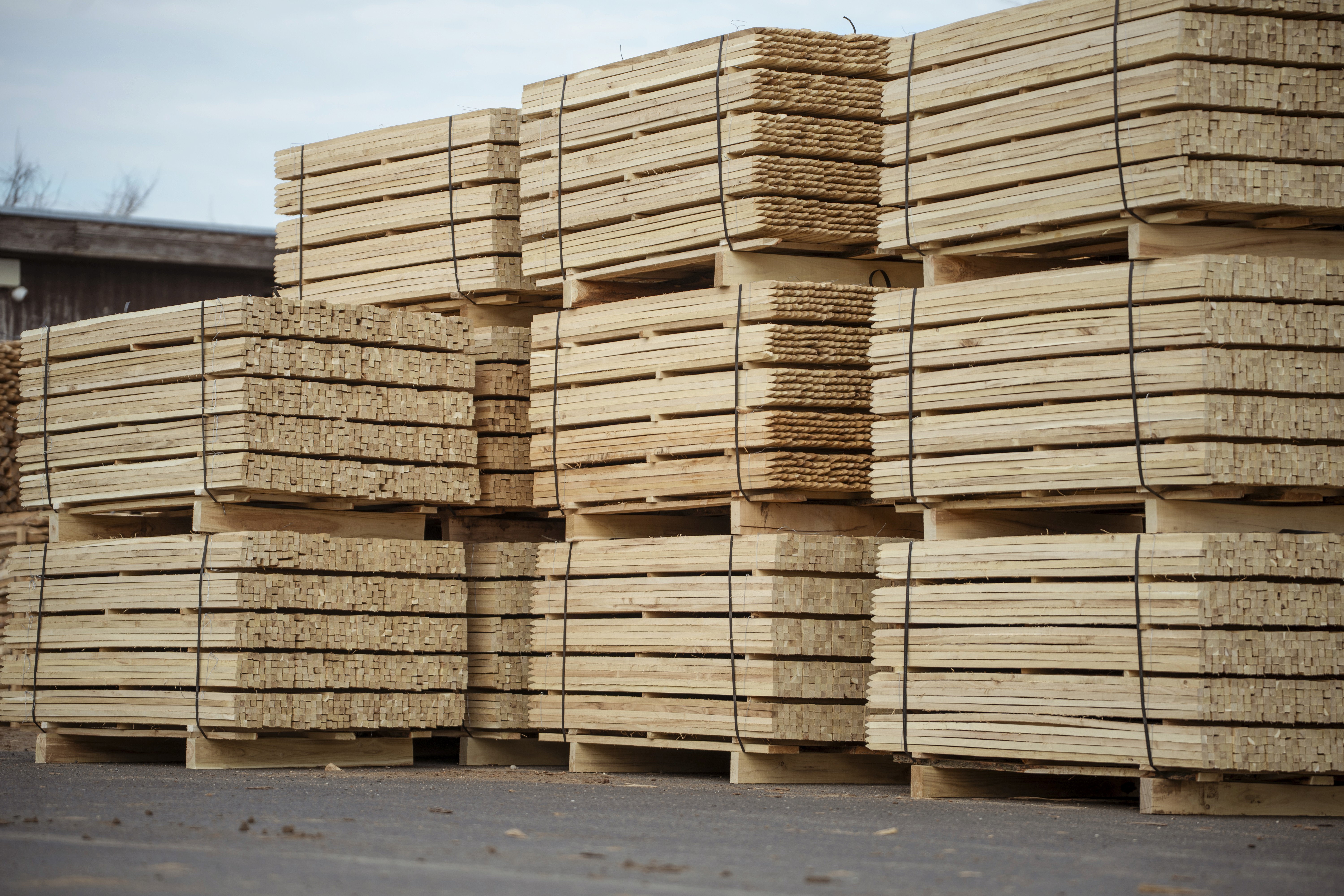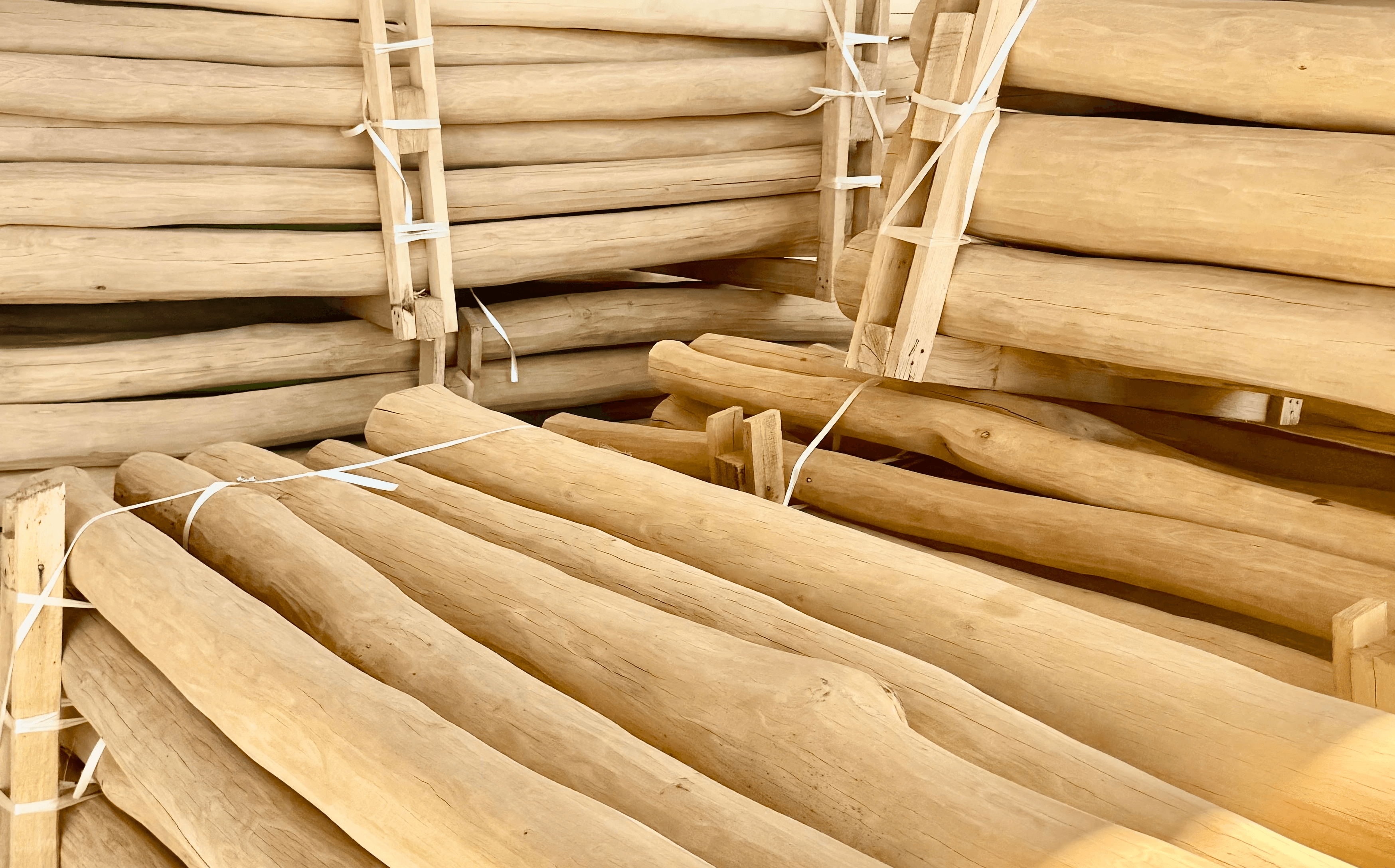
How do you recognise good robinia wood? The most important quality features at a glance
Robinia (Black locust) is one of the most high-quality native timbers in Europe. Due to its exceptional hardness, natural durability and weather resistance, it is often used for decking, garden furniture, playgrounds, fence posts and other outdoor applications. But how do you actually spot high-quality robinia wood? In this article, we show you the most important quality features to look out for when buying.
Why Robinia wood is so popular
The Robinia (Robinia pseudoacacia), often also referred to as "false acacia", yields timber that is among the most durable wood species in Europe. Thanks to its natural resistance to moisture, fungal decay and weathering, Robinia wood is outstandingly suited for outdoor use.
For playground construction and gardening/landscaping, Robinia is therefore a sustainable alternative to tropical hardwoods.
The right colour: A sign of high-quality heartwood
An important quality indicator of Robinia wood is its colouring.
The valuable heartwood possesses a golden-yellow to olive-brown coloration and darkens over time to a warm brown shade. In contrast, the significantly lighter sapwood is less durable and should only be present to a minor extent in high-quality products.
Tip: The higher the proportion of heartwood, the more durable and resistant the product will be.
High density and strength
Robinia wood is one of the hardest European wood species. Quality goods feel heavy and compact. The surface appears firm and resistant.
A simple practical test:
High-quality Robinia wood can hardly be dented with a fingernail.
The wood feels significantly heavier compared to softwoods such as pine or spruce.
The structure appears dense and closed.
This high density ensures a long service life and excellent load-bearing capacity.
Few cracks and warping
Since Robinia wood moves as it dries, smaller drying cracks are generally normal. As a rule, they do not represent a quality defect.
However, ensure that the wood:
does not have deep end splits,
has no continuous longitudinal cracks,
is not severely warped or twisted,
retains as uniform a shape as possible.
Particularly for decking boards, garden furniture or construction timber, careful drying is crucial for subsequent stability.
Assessing knots and grain
Robinia trees often grow irregularly and develop many branches. Therefore, knot-free pieces are comparatively rare.
High-quality Robinia wood is characterised by:
few knots,
small knot diameters,
tightly grown-in knots,
a uniform grain
Loose or already fallen-out knots can impair stability and should be avoided.
Natural durability
One of the greatest advantages of Robinia wood is its natural resistance. The wood species achieves high durability without chemical treatment and is therefore ideal for:
Pergolas and carports
Particularly outdoors, users benefit from the long lifespan and low maintenance requirements.
Straight grain as a quality feature
A grain flow that is as straight as possible indicates high-quality processing and facilitates subsequent use.
Wood with heavily spiralled growth can:
be more difficult to machine,
move more,
be more prone to warping.
For decking boards, furniture or load-bearing construction, a grain that is as straight as possible is therefore particularly important.
The correct moisture content
The wood moisture content also plays a decisive role. Wood that is too wet can warp or form cracks after installation.
Recommended values are:
Indoor use: approx. 8–12% wood moisture
Outdoor use: approx. 12–18% wood moisture
Professionally dried Robinia wood offers the best prerequisites for a long service life.
Quality features of Robinia posts
Anyone buying Robinia posts for fence building or the garden should additionally look out for the following points:
high proportion of heartwood
as little sapwood as possible
no rot spots
no deep longitudinal cracks
stable and firm structure
A high-quality Robinia post convinces through its robustness and, when used correctly, can endure for many years in direct ground contact.
Conclusion: Recognising good Robinia wood made easy
You can recognise high-quality Robinia wood primarily by a high heartwood content, a dense and solid structure, few knots, and professional drying. Small drying cracks are normal, whereas severe warping or deep cracks can point to quality deficiencies.
Paying attention to these features ensures you receive a long-lasting, sustainable and extremely resistant natural product that really plays to its strengths outdoors.
At ROBINIO, we rely on carefully selected Robinia wood of high quality and natural durability – for projects that bring joy for many years.